
Step into the lush world of tropical interior design, where the vibrant colors and natural textures transport you to a paradise within your own home. From the history to the modern trends, this style encapsulates the essence of relaxation and exotic charm.
Join us on a journey to uncover the secrets of creating a tropical oasis in any space.
History of Tropical Interior Design
Tropical interior design has a rich history rooted in the diverse cultures and environments of tropical regions. The design style originated in countries with warm climates, lush vegetation, and vibrant colors, influencing the way spaces were decorated and furnished.
Origins of Tropical Interior Design
Tropical interior design can be traced back to ancient civilizations in tropical regions such as Southeast Asia, Africa, and South America. These cultures incorporated natural elements like bamboo, rattan, and palm leaves into their homes to create a comfortable and tropical ambiance.
Key Elements of Tropical Interior Design
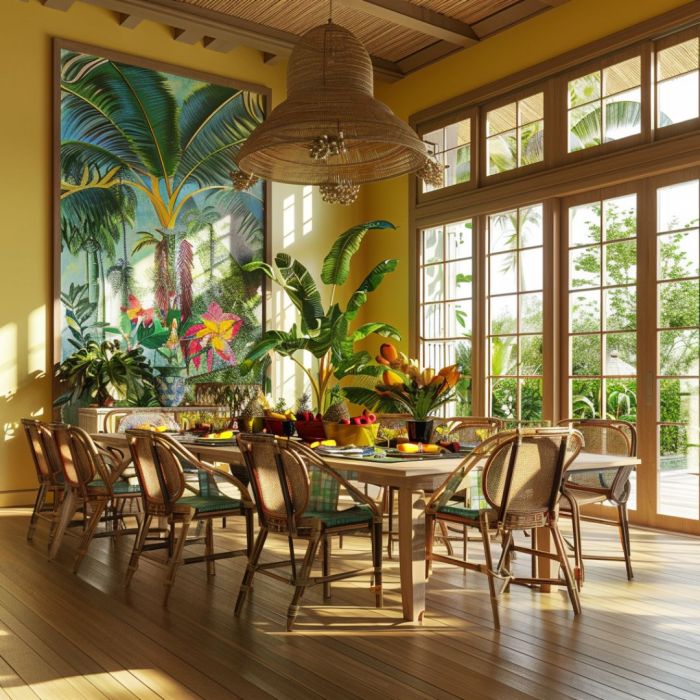
Key elements that define tropical interior design include the use of natural materials such as wood and stone, bright and bold colors inspired by nature, and tropical motifs like palm trees, exotic flowers, and wildlife. Open spaces, natural light, and indoor-outdoor living are also essential components of tropical design.
Colonial Influences on Tropical Interior Design
Colonialism played a significant role in shaping tropical interior design, as European powers introduced their architectural styles and furnishings to tropical colonies. This fusion of European and tropical aesthetics resulted in a unique blend of traditional and colonial elements in tropical homes, characterized by intricate carvings, ornate furniture, and luxurious fabrics.
Color Schemes in Tropical Interior Design
When it comes to tropical interior design, color schemes play a crucial role in creating the desired atmosphere. The colors chosen can evoke the feeling of being in a tropical paradise, with vibrant hues and natural tones working together to bring a sense of relaxation and warmth to the space.
Popular Color Schemes
In tropical interior design, popular color schemes often include a mix of vibrant and bold colors with soothing neutral tones. Bright shades of green, blue, yellow, and orange are commonly used to reflect the lush vegetation, clear skies, sandy beaches, and vibrant flowers of the tropics.
These colors can be balanced with neutral tones like beige, cream, white, or light gray to create a harmonious look that is not overwhelming.
Impact of Color on Space
The choice of colors in a tropical-themed space can greatly impact the overall feel of the room. Vibrant colors can add energy and a sense of excitement, while neutral tones can provide a calming and relaxing atmosphere. By carefully selecting and combining colors, you can create a space that feels inviting, refreshing, and reminiscent of a tropical getaway.
Balance of Vibrant and Neutral Colors
Achieving a balance between vibrant and neutral colors is key to a successful tropical interior design scheme. Too many bright colors can be overpowering and chaotic, while an excess of neutral tones may result in a space that feels bland and uninspired.
By mixing vibrant hues with soothing neutrals in the right proportions, you can create a space that is lively yet harmonious, vibrant yet calming.
Materials and Textures in Tropical Interior Design
In tropical interior design, the use of specific materials and textures plays a crucial role in creating a serene and relaxing ambiance inspired by nature.
Common Materials and Textures
Common materials and textures used in tropical interior design include:
- Bamboo: Bamboo is a versatile material that adds a natural and sustainable touch to tropical interiors. It is often used for furniture, flooring, and decor accents.
- Rattan: Rattan is another natural material commonly found in tropical interior design. It is lightweight, durable, and often used for furniture such as chairs and tables.
- Teak: Teak wood is highly valued for its durability and resistance to moisture, making it a popular choice for outdoor furniture in tropical settings.
- Wicker: Wicker furniture, made from woven natural fibers like rattan, adds a cozy and tropical feel to indoor and outdoor spaces.
Incorporating Natural Elements
Natural elements such as bamboo, rattan, and teak are incorporated into tropical interior design to bring the beauty of the outdoors inside. These materials not only add a sense of warmth and authenticity but also contribute to a sustainable and eco-friendly design aesthetic.
Importance of Textures
Textures play a significant role in creating a tropical ambiance by adding depth and visual interest to the space. Incorporating textures like woven rattan, rough-hewn wood, and natural fibers enhances the tactile experience and evokes a sense of relaxation and tranquility.
Furniture and Decor in Tropical Interior Design
When it comes to furniture and decor in tropical interior design, there are specific pieces and elements that can help create a relaxed and breezy atmosphere in your space. From characteristic furniture pieces to decor items like plants and seashells, incorporating these elements can transform your home into a tropical oasis.
Characteristic Furniture Pieces
In tropical interior design, characteristic furniture pieces often include items like canopy beds, wicker chairs, rattan sofas, and bamboo tables. These pieces are typically made from natural materials like wood, rattan, and bamboo, which add warmth and texture to the space.
Canopy beds, in particular, can create a sense of luxury and relaxation, while wicker chairs and rattan furniture bring a casual and laid-back feel to the room.
Mixing and Matching Furniture Styles
To achieve a tropical look, it's essential to mix and match different furniture styles effectively. You can blend modern furniture pieces with traditional tropical elements like bamboo or rattan to create a unique and eclectic style. Mixing textures and materials such as wood, wicker, and metal can add depth and visual interest to the space.
Don't be afraid to experiment with different combinations until you find a balance that suits your taste and complements the overall tropical theme.
Selecting Decor Items
When it comes to selecting decor items for a tropical interior design, consider incorporating elements like tropical plants, seashells, woven baskets, and colorful textiles. Tropical plants such as palm trees, monstera, and orchids can bring a touch of nature indoors and enhance the tropical vibe.
Seashells and woven baskets can add a coastal feel to the space, while colorful textiles like printed cushions or rugs can inject pops of color and pattern into the room. By carefully curating these decor items, you can create a harmonious and inviting tropical ambiance in your home.
Lighting Techniques for Tropical Interior Design
Lighting plays a crucial role in enhancing the overall ambiance of a tropical interior. It helps create a warm and inviting atmosphere while highlighting the natural elements and textures commonly found in tropical design.
Utilizing Natural Light
Natural light is a key element in tropical interior design as it brings a sense of openness and airiness to the space. Large windows, skylights, and glass doors are often incorporated to allow ample natural light to flow into the room.
This not only brightens up the space but also creates a seamless connection with the outdoors.
Choosing Lighting Fixtures
When selecting lighting fixtures for a tropical theme, opt for fixtures that complement the natural elements and color scheme of the space. Rattan or bamboo pendant lights, woven sconces, and shell chandeliers are popular choices that add a touch of tropical flair.
Soft, warm lighting such as ambient or accent lighting can help create a cozy and relaxed atmosphere, perfect for a tropical-inspired interior.
Closing Summary
As we conclude our exploration of tropical interior design, one thing is clear - incorporating elements of nature and culture can truly transform a room into a tropical haven. Embrace the warmth, the colors, and the textures to infuse your living space with the spirit of the tropics.
Let your imagination run wild as you embark on your own design adventure inspired by the beauty of the tropics.
Frequently Asked Questions
What are some common materials used in tropical interior design?
Bamboo, rattan, teak, and seagrass are commonly used to bring a natural and tropical feel to spaces.
How can I balance vibrant and neutral colors in a tropical interior design scheme?
Start with a neutral base and then add pops of vibrant colors through accessories like pillows, rugs, and artwork to create a harmonious balance.
What role does lighting play in tropical interior design?
Lighting is crucial in creating the right ambiance in a tropical space. Natural light is often maximized, and the use of warm, soft lighting enhances the tropical feel.